Monday, September 17, 2012

T-7

At this time next week I will be attending the first day of flight school in Phoenix. I'm very excited, but also fairly anxious as, until I get there, I don't really know what to expect. I've been spending time studying for the first phase of training every day, and I think I'm ready, but we'll see. The book learning I'm doing now isn't quite "real" until I put it in practice in the plane.

Today I'm having lunch with a guy who just graduated from the program, so I'll have an opportunity to get some solid inside knowledge from someone who's "been there, done that." The rest of the week will be spent getting everything packed up and ready to go. It's hard to believe that on Thursday morning I'll be leaving home and won't be back until November for Thanksgiving.

I've mapped out my route to Phoenix. Since I've taken the I-5 route South numerous times, I decided on a more Easterly route that goes through Nevada. On day one I'll head East on I-90 to Ellensberg, WA, then Southeast on I-84 to Twin Falls, ID. That should take around 10 hours, and I'll spend the night in Twin Falls. Day two will be a straight shot through the Nevada desert on Highway 93, and that should take about nine hours, which leaves the final push to Phoenix on day three continuing on Hwy. 93. My first stop in Phoenix will be at the ATP office at Phoenix-Mesa Gateway Airport to pick up the keys to my apartment. Then I'll head to the apartment to meet my roommates and unpack. I'll have all day Sunday to get settled in, go to the store to pick up anything I forgot to bring, and get ready for training to start at 0800 Monday morning.


View Larger Map

Monday, September 10, 2012

T-14

I ordered my school uniforms today. Royal blue dri-fit golf shirts with chinos. That's all I'll be wearing for the next nine months, so at least getting dressed in the morning will be simple!

I'm continuing to study the materials for the multi-engine rating. It has taken a few days to shift back into student mode, but now things are starting to click well. I've got the V-speeds memorized, and now I'm focusing on emergency checklists. I think I'll have no problem passing the oral exam part of the checkride.

And in case some haven't seen it, here's a video that helps keep me motivated:

Friday, September 7, 2012

T-17 Days

I've been busy studying for my multi-engine rating, and prepping for the move. ATP sent me a stack of exam guides and training supplements that I'm going over:


One of them is the Piper Seminole Training Supplement, which must be memorized prior to training. It covers the essentials of multi-engine flight dynamics, Seminole aircraft systems, performance data, and emergency checklists. I've created some flash cards on my iPad to help with memorization. I'm noticing that my middle-aged brain is not quite as good at absorbing this stuff as it used to be. The printed material is only a fraction of what I'll need to learn during my training. The bulk of the material is accessed via iPad courseware.

As I start to pack, I'm wondering how I'm going to fit everything I'm bringing to Phoenix in my Smart car. Honestly, I think the biggest challenge of this training might just be the drive to Phoenix. Twenty-five hours driving across the desert in the the Smart car is going to be...interesting. It's a great commuter car, but I've never been further than 50 miles from Seattle in it. It's loud, has no cruise control, and the suspension is like a go-kart. I'm giving myself three days for the drive, and I have an extra day as a buffer in case it takes longer. Should be exciting.

Tuesday, September 4, 2012

Piper Seminole

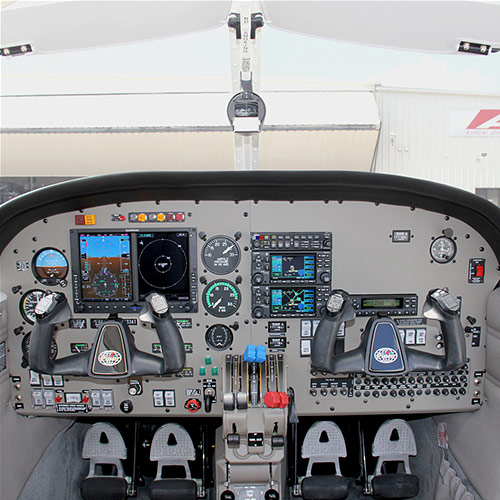
This is the type of plane I'll be doing most of my flying in during school. The PA-44-180 Piper Seminole.

And this is what the instrument panel looks like:


It's equipped with a Garmin G500 glass panel display and dual Garmin GNS430 GPS NAV/COM radios.

Here are some stats about the plane:


Engine
Manufacturer: Lycoming
Model: 0-360-A1H6/LO-360-A1H6
Horsepower: 180 hp

Weights
Gross Weight: 3800 lbs/1724 kgs
Standard Empty/Equipped Weight (*b,c): 2586 lbs/1173 kgs
Standard Useful Load (*a): 1230 lbs/558 kgs

Dimensions
Wing Span: 38.6 feet/11.8 meters
Length: 27.6 feet/8.4 meters
Height: 8.5 feet/2.6 meters
Wing Area: 183.8 square feet/17.08 square meters

Fuel Capacity
Usable Fuel: 108 gallons/409 litres

Maximum Speed
TAS at Gross Weight: 168 kts/311 kmh

Cruising Speeds
Normal Cruise Speed: 162 kts/300 kmh

Cruising Range
Cruising Range: 610 nm/1130 km
(45 minute reserves at 75% power)

Stall Speed
Flaps Down Full 40 degrees: IAS 55 kts/IAS 102 kmh

Service Ceiling
Twin Engine (100 fpm): 15,000 feet/4572 meters
Single Engine (50 fpm): 3,800 feet/1158 meters

Take-Off Distance
Total over 50-foot obstacle: 2200 feet/671 meters

Landing Distance
Total over 50-foot obstacle: 1490 feet/454 meters

*a. Standard Useful load is ramp weight minus standard equipped weight.
*b. The standard empty weight and standard equipped weight are the same.
*c. Standard aircraft per marketing.

In Which I Decide to Become a Professional Pilot

Yup, that's right. I am leaving my career in the software industry to go fly airplanes for a living. I left my job back in June, and since then I've spent a lot of time thinking about where I want to go and what I want to do with the rest of my life. The reality is that flying is the first thing I can remember ever wanting to do, and I'm at the point where I either need to go for it, or give up the dream for good. I came to the realization that I didn't want to risk living the rest of my life regretting not pursuing a dream I've had since I was a little kid. So with that in mind, and with the support of my amazing wife, I've enrolled in the Airline Career Pilot Program at Airline Transport Professionals (ATP). ATP is the largest flight school in country, and they offer a fast-track program that results in getting the multi-engine, instrument, single- and multi-engine commercial, certified flight instructor, certified instrument instructor, and multi-engine instructor ratings in 90 days. Those are all the ratings one needs to be a professional pilot. I start training on September 24 in Mesa, Arizona. After that I have a guaranteed job with ATP as a flight instructor in order to build enough hours to get hired by a regional airline. Ultimately I hope to be hired on at a regional by this time next year.

To say I'm excited is an understatement. This is going to be an incredible adventure, as well as a huge challenge. The training is intense, and I'll be flying pretty much seven days a week. There's a huge amount to learn, and I've already started studying for the first phase of the program, which is the multi-engine rating. I already have my multi-engine checkride scheduled for October 2, and I haven't even started the school yet!

This will also be a big challenge personally, as I will have to be living away from my wife and kids for at least three months. The longest I've ever been away from home previously was two weeks. While in Arizona, I'll be living with three other ATP students in a two bedroom apartment. I haven't had a roommate since my Army days over 20 years ago, so needless to say that will take some getting used to. I hope they can handle living with a gassy, grumpy, middle-aged guy like me :)

I will try to keep this blog updated with my progress and experiences, so check back to see how it's going.

Oh, and the one downside of all this is that the school dress code forbids facial hair, which means I've had to shave off my handlebar moustache. :(

Wednesday, August 26, 2009

Daddy, My Ears Hurt!

On August 16th the weather was beautiful and so I planned a flight East across the cascades and then North to Omak (KOMK), a small airfield just North of Okanagan. My daughter, Lauren, was excited to go too, so she and I headed to the airport around 3:30 that afternoon. I had originally planned to take a 172 (N9534H), however when I got to the airport I noticed that the 182 (N42043) was available. I canceled the reservation for '34H and booked '043 until 9:00 PM. I did the preflight and we took off into a blue sky dotted with puffy white clouds. As we climbed, Lauren complained that she was getting a headache, probably because the adult-sized headset she was wearing was squeezing a little too hard. As we passed Cle Elum on the East side of the Cascades she said she wanted to go back home, so we turned around and headed back. I started a 500 foot-per-minute descent, and within a few minutes Lauren started complaining that her ears were hurting. I tried to help her equalize the pressure, but she wasn't having any luck. Unfortunately we had to continue on down in order to make the landing back at Auburn, and she was in tears during the rest of the flight. Since I had to keep flying the plane, there wasn't anything I could do for her. It's hard knowing your little girl is in pain but there's nothing you can do to comfort her. Fortunately after we landed she started feeling a lot better. I need to start looking for a kid-sized headset, and try to teach Lauren how to relieve the pressure in her ears. Total time: 1.2 hrs.

Wednesday, August 12, 2009

Olympic Airport Tour

After the outrageous heat wave we had here (the hottest temperatures ever recorded in Seattle, 103 deg.!), the weather turned wet and cloudy. But on Tuesday the ceiling was forcast to lift up to 3600', so after work I decided to fly out to the coast and land at some airports I hadn't visited before. The planned route was Auburn (S50) -> Elma (4W8) -> Willapa Harbor (2S9) -> Westport (14S) -> Bowerman (KHQM) -> Sanderson (KSHN) -> Auburn (S50).

Overall the flight was great. The air was very smooth, and I only had to dodge one low cloud on the way to Elma. After Elma, as I approached Willapa Harbor, I noticed some panels layed out in an "X" on the runway, which is an indication that the airport is closed. As I flew over the field I saw several trucks crossing back and forth over the runway. Evidently they are making some improvements to the field. So I had to skip a landing there and continued on to Westport where I made a nice touch-and-go. From there it was on to Bowerman in Hoquiam. Bowerman has a long, wide runway, so landing there was no problem.

Next up was Sanderson. On the way there I heard on the radio a Piper Super Cub doing touch-and-go's, but he had landed for good by the time I got there. Another easy touch-and-go. After that it was back across Tacoma Narrows Class D and a final landing at Auburn.

Overall the flight was a great training exercise in cockpit resource management. Since most of the waypoints were within 30 miles of each other or less, I had to keep busy navigating, setting up the radios, decide which runway to land on, communicating, and keeping an eye out for traffic. Total flight time was 2.4 hours with landings at four new airports.

Below is the SPOT track of my route and some pictures I took along the way.