Thursday, March 26, 2015

Beautiful Evening

I love the Spring time change. That extra hour of daylight means that I can fit a flight lesson in after work. Today was a perfect day for flying. 62 deg., clear and no wind. I met one of my students after work for some landing practice. Everything seemed to come together for him today and he was able to make the last four or five landings without any help from me. At this rate I'll be able to sign him off to solo in another lesson or two. I really love it when a student makes such great progress.


Wednesday, March 25, 2015

I'm Back!

So it's been a while since I last posted. Nearly two and half years actually. As you may recall, last time I posted I was in Arizona attending ATP professional pilot school. Long story short, I completed the program and graduated with the following ratings:

  • Commercial Pilot, Single Engine Land
  • Commercial Pilot, Multi-Engine Land
  • Instrument Pilot
  • Certified Flight Instructor
  • Certified Multi-Engine Flight Instructor
  • Instrument Flight Instructor
That means I can legally get paid to fly airplanes, and teach others how to fly airplanes. The training program is something I will remember all my life. It was challenging, but also a tremendous amount of fun. I logged nearly 200 hours of flight time, and got to fly 4-8 hours a day, seven days a week. 

After graduating, I signed on as a flight instructor with a flight school at Boeing Field. It was a pretty good gig and I got to fly about 20 hours a week. It quickly became apparent though that it was simply not feasible to make a living as a full-time pilot. For the first couple of years I would have to work as a flight instructor making $12-$15 an hour. After that, I'd have to work at a regional airline making $18K - $20K a year. I discovered I'm not prepared to scale back my standard of living that much! It could work for a 20-something single guy, but for a middle-aged guy with a wife, two kids, and a mortgage, not so much.

So ultimately I decided to go back to work in the software industry which would enable me to fly on my own terms. I purchased my own airplane (a Mooney M20K 252), and started working as an agile coach and management consultant. I did my "regular" job during the week, and did flight instruction on the weekends. Eventually the flight school I was working at went under, and so I started instructing as an independent instructor. My consulting work required me to travel a lot, and having my own airplane meant that I could fly myself to the job location. I spent almost two years commuting between Seattle and San Jose in my Mooney.
Crater Lake during a flight to San Jose
I eventually grew tired of being away from my family so much, so a few months ago a took a position as Vice President of Engineering at a Seattle telecommunications company. Now that I'm back in Seattle, I have time to instruct on weekends and in the evenings after work. With the weather starting to improve, I should be able to fly about 10 hours a week. I currently have two students that I'm flying with regularly, and looking for a couple more.

So that catches things up, and I promise to try and keep the blog more up to date. My flight instruction business has it's own website, so check it out, and if you want to go flying, let me know!

Thursday, October 4, 2012

Phase I Complete: Multi-Engine Pilot

As of yesterday, I've completed phase I of the ATP Airline Career Pilot Program, and I'm also now a multi-engine rated pilot! It's been an intense couple of weeks. Between studying, flying, and sleeping, I haven't had a lot of time for anything else, much less updating the blog. Here's a rundown of the past 10 days:

Day 1
Arrived at ATP at 9:00 in the morning. Spent the first couple of hours doing paperwork and absolving ATP of any responsibility should I crash and burn. Then it was a couple of hours of ground school covering Piper Seminole systems and twin engine flight dynamics. I was glad that I had spent time preparing and had already memorized a lot of the information that was covered. I also met my classmate (call her "M"). The two of us are going through the career pilot program together. She has actually been here since April, as she started without a pilot's license. There was an FAA SNAFU which held up getting her class-one flight physical, which delayed her training quite a bit. Normally she would have been finished with the whole program by now, but she has another three months to go. I will say that its nice having her in my class, as she's closer to my age. Pretty much everyone else around here is young enough to be my kid :)  M has two kids of her own, so at least we have something in common. I have the distinction of being the oldest student here.

Day 2
More ground instruction. My instructor definitely knows his stuff, and he expects us to know it as well. After ground, it was a couple of hours in the flight simulator, or as it's known here, "the Stimulator." Flying the sim is rough. It's very sensitive, and since you don't have the feedback you get from flying in a real airplane, it can be very difficult to fly. My instructor said that if I did well in the sim today and Wednesday, we'd fly on Thursday.

Day 3
More ground, more sim. My instructor was very pleased with my progress and scheduled a flight for Thursday.

Day 4
First flight in the Seminole, and it went very well. We practiced flight maneuvers and takeoffs and landings. The Seminole is easier to fly than a Cessna. It's heavier, and has a higher wing loading, so it's more stable in the air. Landing it is also much easier. All you have to do is power to 15", put the gear and flaps down, and then fly it around base and final at 88 kts. To land, just fly a foot over the runway and cut the throttle, and it plonks right down. My instructor was impressed that I was able to put it exactly where I wanted it on the runway every time. One thing that is definitely different about flying twins is that you have two engines, and you can fly with one of them stopped. We practiced flying with the engine out and I grabbed this picture:


It is very strange flying in an airplane with an engine not running!

Day 5
More maneuvers in the Seminole. We practiced steep turns, slow flight, power-on and power-off stalls, emergency descents, and Vmc demos. A Vmc demo is were you kill one engine, slow down and pitch up to the point were you are about to lose directional control of the airplane. This is done in order to understand what can happen with one engine out. It's probably one of the most important maneuvers to learn when flying multi-engine airplanes. We then headed back to the airport to practice more landings, including landing with one engine out.

Day 6
Today was ground school and simulator. 

Day 7
Flight number three. Things seem to have degraded. My landings and maneuvers have all gotten worse since I started. It's not helping that the temperature as been over 100 every day, and the cockpit is like a greenhouse. I am starting to get familiar with the local terrain. It's easy to get lost in the desert since it's just a flat expanse of brown with some brown bumps. Two of the biggest challenges I'm having are with radio operation and breaking my Cessna habits. On the radio, I often miss hearing the controllers because I'm used to listening for the callsign of my airplane. Here I'm flying a different plane all the time, and I'm not used to the new callsign numbers. Also, the controllers here talk so fast it's hard to understand them. Since I normally fly in the mountains into small, uncontrolled airstrips, I'm not used to  the chaos of a busy airport like Mesa-Gateway. I also frequently revert back to the habits I've picked up flying Cessnas. I'm used to certain controls being in certain places, and sometimes it takes me a second to figure out where something is.

Day 8
Last flight before my checkride. Overall the flight went well, and my instructor says I should have no problem passing, but I'm very nervous. Spent the night doing more studying.

Day 9
Check ride. Got to the airport at 9:00 AM for my 10:30 checkride. I found out at the last minute that the examiner only accepts cash, so I have to scramble to find an ATM. Unfortunately the ATM has a $160 limit. So I have to go to another. That one has a $200 limit, so I have to go to a third. Get to the third and realize I left my card in the last ATM. Head back to that bank, fill out paperwork to get my card back, and then back to bank #3 to get the rest of the cash. Back to the airport, only to sit around and wait for another hour as the examiner hasn't finished with his previous student. The examiner and I hit if off really well, as he's an older guy and shares my haircut :)  During the oral I answered every question and the examiner finally said "it's clear you know this stuff, let's go fly." The flight exam couldn't have gone better. I nailed every maneuver. We landed for the last time and he said "congratulations, you passed." Now I have a multi-engine rating.

Day 10
The last two flights of Phase I are supposed to be VFR cross-country flights to build cross-country time towards the commercial rating. Since I already have enough cross-country hours for the rating, we elected to fly these flights as IFR to get an early start on my instrument training. IFR means "instrument flight rules" which basically means flying while blind - i.e. flying in clouds without being able to see anything outside. We filed an IFR flight plan to Yuma, AZ, and took off around 3:30 PM. It was a fun flight, but flying only by looking at the instruments is very hard. In addition to flying the plane, you have to talk to ATC on the radio, and anticipate everything that's going to happen next. There's a million things to deal with, and if you can't multi-task you're in big trouble. It's definitely going to take awhile to get used to this.  

On the approach to Yuma, we did what's known as a "PAR," or Precision Approach Radar approach. This means that instead of getting guidance from your instruments, a controller verbally talks you down. He continuously talks to you through the radio telling you if you are too low, too high, or left or right of the flight path. These kinds of approaches are almost exclusively done at military airports, and Yuma is predominately a Marine Corps base. It was pretty interesting. 

Upon landing we taxied over to the civilian part of the airport, and parked at the local FBO called "Million Aire." The place is VERY swanky. When we parked the airplane, A line boy ran up and as soon as we opened the door he handed us a couple of ice-cold bottles of water. We went inside and the place was gorgeous. They had private pilot lounges with big overstuffed leather recliners where you can relax and sleep, and they will run out to any of the local restaurants for you and get food for you. They also offer all the free sodas you want. They also have a free courtesy car, and unlike most airports that beat up old clunkers, this place had a brand new Mercedes Benz. We decided to order some awesome shrimp tacos from a local Mexican restaurant and watch the presidential debate on a big screen TV. 

Once it got dark, I pre-flighted the airplane and we headed back to Mesa. Flying across the desert at night is very cool. It is absolutely pitch black, except for the occasional light on the ground, or from another airplane. We had a small UFO encounter, when we saw a bright light at our two o'clock exactly matching our pace. We couldn't figure out what it was. After a couple of minutes we called ATC and asked if there was any traffic around us, and he said that it was an A-10 Warthog ground attack plane flying next to us. Eventually he turned the light off and disappeared. It was pretty trippy.

We finally landed back at Mesa around 9:30. I was exhausted, so I drove back to my apartment and crawled into bed. Thus marked the end of phase I.

Well, that's the recap of phase I. Today I started the instrument phase. We did a little bit of ground school and then hit the simulator. My instructor said there was only one person he's ever seen do as well as I did on the first day, so I'm hoping that bodes well for the rest of phase II. The instrument part of the program lasts a month, and some say it's the most difficult. There's a LOT to learn, and your flying has to be very precise, so I have a lot to learn before my checkride on Oct. 30. I have seven more simulator flights before we go back up in the plane again, and a ton of material to study by then.

Now I'm off to hit the books.

Monday, September 24, 2012

And so it begins...

After a long, hard drive I made it to Arizona. Day one of the drive took me from Seattle to Twin Falls, Idaho. Overall it was a fine drive, with the only downside being the thick smoke that hung in the air all the way across Washington, Oregon, and Idaho. The visibility was only one or two miles; it was like driving in a smoky bubble. By the end of the day my eyes were burning.

The next day was a trek across the Nevada desert. The smoke was still in the air, and it lasted all the way across the Northern part of Nevada. It was the most difficult part of the drive, as the altitude across much of Nevada is around 6000', and my little Smart car was really sucking wind. I did nearly the entire drive with the pedal firmly to the floor just to be able to do the speed limit. Unfortunately my car doesn't have cruise control, and my right calf is still sore from mashing the gas. But I made it to Vegas, and that evening I went to the Aria casino for the buffet. It was excellent, and had the added perk of being lobster night with free wine.

The last day was a fairly easy drive to Mesa. I watched as the temperature slowly rose from 90 in Las Vegas, to a high of 109 in Arizona. When I finally got to Mesa it was 105. Ugh. The first thing I did when I got to Phoenix was stop at a car wash to scrub the layer of bugs off the car. Then it was off to the ATP office at the airport to pick up the keys to my apartment. Finally I arrived at the apartment, met my two roommates, and got unpacked.

The apartment is OK. It's a three bedroom, so we each get a room to ourselves for now. Another guy was supposed to be arriving by today, but he hasn't shown up, so hopefully I'll get to keep a room to myself for awhile. There's not much for amenities in the apartment. I have a small bed and a dresser, and that's it. There's a couch and love seat in the living room, and a dining table with four chairs. Fortunately we have a washer/dryer in the apartment. We're on the second foor, and our balcony overlooks a beach volleyball court and a nice pool. The complex also has a fairly nice gym.

On Sunday I relaxed after the long trip, and then went out to pick up a few things I needed. I also bought some glassware since there were only two cups in the whole apartment. In the evening one of my roommates and I went across the street for a beer, and some of the instructors were there as well. It turns out that one of them was my instructor, so it was great to get a chance to talk with him before class. The instructors were also having a BBQ that night, so we all went over to the their apartment for beers, and then grilled carne asada and steaks out by the volleyball court. It was a lot of fun.

This morning I woke up bright and early to get ready for class. I had a quick breakfast and made the five-minute drive to the airport. I met the other student that will be going through the multi-engine and instrument phases with me, and we spent the first couple of hours doing paperwork. After that, we kicked off ground school with a 50-question general aviation test. I was worried I wouldn't do well, since a lot of that stuff I haven't reviewed since I got my pilot's license 13 years ago, but I ended up only missing a couple of obscure questions, so I was happy about that. My instructor seems to think I'll do pretty well.

Then we headed outside to check out the planes (HOT HOT HOT), and then back inside to see the simulators. We fired one up, and I took the opportunity to take off, kill an engine, and then land. I didn't crash, and was able to breeze through the engine out checklist from memory, so I think that's a good sign. When I got home, some of the other books I had ordered were waiting for me on the doorstep.  So I have a whole pile of stuff I need to study.

Once it cooled off to a chilly 98 deg. tonight, I walked about a mile to Staples to pick up a couple of things. It's funny how after just a couple of days 98 deg. feels pleasant.

Tomorrow and Wednesday will be spent in the simulators, and hopefully I'll get to fly on Thursday.


Monday, September 17, 2012

T-7

At this time next week I will be attending the first day of flight school in Phoenix. I'm very excited, but also fairly anxious as, until I get there, I don't really know what to expect. I've been spending time studying for the first phase of training every day, and I think I'm ready, but we'll see. The book learning I'm doing now isn't quite "real" until I put it in practice in the plane.

Today I'm having lunch with a guy who just graduated from the program, so I'll have an opportunity to get some solid inside knowledge from someone who's "been there, done that." The rest of the week will be spent getting everything packed up and ready to go. It's hard to believe that on Thursday morning I'll be leaving home and won't be back until November for Thanksgiving.

I've mapped out my route to Phoenix. Since I've taken the I-5 route South numerous times, I decided on a more Easterly route that goes through Nevada. On day one I'll head East on I-90 to Ellensberg, WA, then Southeast on I-84 to Twin Falls, ID. That should take around 10 hours, and I'll spend the night in Twin Falls. Day two will be a straight shot through the Nevada desert on Highway 93, and that should take about nine hours, which leaves the final push to Phoenix on day three continuing on Hwy. 93. My first stop in Phoenix will be at the ATP office at Phoenix-Mesa Gateway Airport to pick up the keys to my apartment. Then I'll head to the apartment to meet my roommates and unpack. I'll have all day Sunday to get settled in, go to the store to pick up anything I forgot to bring, and get ready for training to start at 0800 Monday morning.


View Larger Map

Monday, September 10, 2012

T-14

I ordered my school uniforms today. Royal blue dri-fit golf shirts with chinos. That's all I'll be wearing for the next nine months, so at least getting dressed in the morning will be simple!

I'm continuing to study the materials for the multi-engine rating. It has taken a few days to shift back into student mode, but now things are starting to click well. I've got the V-speeds memorized, and now I'm focusing on emergency checklists. I think I'll have no problem passing the oral exam part of the checkride.

And in case some haven't seen it, here's a video that helps keep me motivated:

Friday, September 7, 2012

T-17 Days

I've been busy studying for my multi-engine rating, and prepping for the move. ATP sent me a stack of exam guides and training supplements that I'm going over:


One of them is the Piper Seminole Training Supplement, which must be memorized prior to training. It covers the essentials of multi-engine flight dynamics, Seminole aircraft systems, performance data, and emergency checklists. I've created some flash cards on my iPad to help with memorization. I'm noticing that my middle-aged brain is not quite as good at absorbing this stuff as it used to be. The printed material is only a fraction of what I'll need to learn during my training. The bulk of the material is accessed via iPad courseware.

As I start to pack, I'm wondering how I'm going to fit everything I'm bringing to Phoenix in my Smart car. Honestly, I think the biggest challenge of this training might just be the drive to Phoenix. Twenty-five hours driving across the desert in the the Smart car is going to be...interesting. It's a great commuter car, but I've never been further than 50 miles from Seattle in it. It's loud, has no cruise control, and the suspension is like a go-kart. I'm giving myself three days for the drive, and I have an extra day as a buffer in case it takes longer. Should be exciting.

Tuesday, September 4, 2012

Piper Seminole

This is the type of plane I'll be doing most of my flying in during school. The PA-44-180 Piper Seminole.

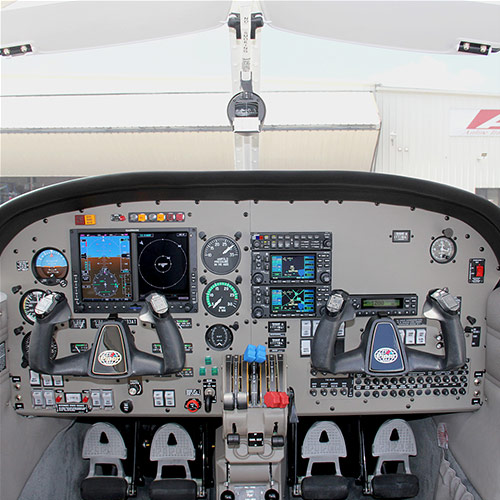
And this is what the instrument panel looks like:


It's equipped with a Garmin G500 glass panel display and dual Garmin GNS430 GPS NAV/COM radios.

Here are some stats about the plane:


Engine
Manufacturer: Lycoming
Model: 0-360-A1H6/LO-360-A1H6
Horsepower: 180 hp

Weights
Gross Weight: 3800 lbs/1724 kgs
Standard Empty/Equipped Weight (*b,c): 2586 lbs/1173 kgs
Standard Useful Load (*a): 1230 lbs/558 kgs

Dimensions
Wing Span: 38.6 feet/11.8 meters
Length: 27.6 feet/8.4 meters
Height: 8.5 feet/2.6 meters
Wing Area: 183.8 square feet/17.08 square meters

Fuel Capacity
Usable Fuel: 108 gallons/409 litres

Maximum Speed
TAS at Gross Weight: 168 kts/311 kmh

Cruising Speeds
Normal Cruise Speed: 162 kts/300 kmh

Cruising Range
Cruising Range: 610 nm/1130 km
(45 minute reserves at 75% power)

Stall Speed
Flaps Down Full 40 degrees: IAS 55 kts/IAS 102 kmh

Service Ceiling
Twin Engine (100 fpm): 15,000 feet/4572 meters
Single Engine (50 fpm): 3,800 feet/1158 meters

Take-Off Distance
Total over 50-foot obstacle: 2200 feet/671 meters

Landing Distance
Total over 50-foot obstacle: 1490 feet/454 meters

*a. Standard Useful load is ramp weight minus standard equipped weight.
*b. The standard empty weight and standard equipped weight are the same.
*c. Standard aircraft per marketing.

In Which I Decide to Become a Professional Pilot

Yup, that's right. I am leaving my career in the software industry to go fly airplanes for a living. I left my job back in June, and since then I've spent a lot of time thinking about where I want to go and what I want to do with the rest of my life. The reality is that flying is the first thing I can remember ever wanting to do, and I'm at the point where I either need to go for it, or give up the dream for good. I came to the realization that I didn't want to risk living the rest of my life regretting not pursuing a dream I've had since I was a little kid. So with that in mind, and with the support of my amazing wife, I've enrolled in the Airline Career Pilot Program at Airline Transport Professionals (ATP). ATP is the largest flight school in country, and they offer a fast-track program that results in getting the multi-engine, instrument, single- and multi-engine commercial, certified flight instructor, certified instrument instructor, and multi-engine instructor ratings in 90 days. Those are all the ratings one needs to be a professional pilot. I start training on September 24 in Mesa, Arizona. After that I have a guaranteed job with ATP as a flight instructor in order to build enough hours to get hired by a regional airline. Ultimately I hope to be hired on at a regional by this time next year.

To say I'm excited is an understatement. This is going to be an incredible adventure, as well as a huge challenge. The training is intense, and I'll be flying pretty much seven days a week. There's a huge amount to learn, and I've already started studying for the first phase of the program, which is the multi-engine rating. I already have my multi-engine checkride scheduled for October 2, and I haven't even started the school yet!

This will also be a big challenge personally, as I will have to be living away from my wife and kids for at least three months. The longest I've ever been away from home previously was two weeks. While in Arizona, I'll be living with three other ATP students in a two bedroom apartment. I haven't had a roommate since my Army days over 20 years ago, so needless to say that will take some getting used to. I hope they can handle living with a gassy, grumpy, middle-aged guy like me :)

I will try to keep this blog updated with my progress and experiences, so check back to see how it's going.

Oh, and the one downside of all this is that the school dress code forbids facial hair, which means I've had to shave off my handlebar moustache. :(

Wednesday, August 26, 2009

Daddy, My Ears Hurt!

On August 16th the weather was beautiful and so I planned a flight East across the cascades and then North to Omak (KOMK), a small airfield just North of Okanagan. My daughter, Lauren, was excited to go too, so she and I headed to the airport around 3:30 that afternoon. I had originally planned to take a 172 (N9534H), however when I got to the airport I noticed that the 182 (N42043) was available. I canceled the reservation for '34H and booked '043 until 9:00 PM. I did the preflight and we took off into a blue sky dotted with puffy white clouds. As we climbed, Lauren complained that she was getting a headache, probably because the adult-sized headset she was wearing was squeezing a little too hard. As we passed Cle Elum on the East side of the Cascades she said she wanted to go back home, so we turned around and headed back. I started a 500 foot-per-minute descent, and within a few minutes Lauren started complaining that her ears were hurting. I tried to help her equalize the pressure, but she wasn't having any luck. Unfortunately we had to continue on down in order to make the landing back at Auburn, and she was in tears during the rest of the flight. Since I had to keep flying the plane, there wasn't anything I could do for her. It's hard knowing your little girl is in pain but there's nothing you can do to comfort her. Fortunately after we landed she started feeling a lot better. I need to start looking for a kid-sized headset, and try to teach Lauren how to relieve the pressure in her ears. Total time: 1.2 hrs.

Wednesday, August 12, 2009

Olympic Airport Tour

After the outrageous heat wave we had here (the hottest temperatures ever recorded in Seattle, 103 deg.!), the weather turned wet and cloudy. But on Tuesday the ceiling was forcast to lift up to 3600', so after work I decided to fly out to the coast and land at some airports I hadn't visited before. The planned route was Auburn (S50) -> Elma (4W8) -> Willapa Harbor (2S9) -> Westport (14S) -> Bowerman (KHQM) -> Sanderson (KSHN) -> Auburn (S50).

Overall the flight was great. The air was very smooth, and I only had to dodge one low cloud on the way to Elma. After Elma, as I approached Willapa Harbor, I noticed some panels layed out in an "X" on the runway, which is an indication that the airport is closed. As I flew over the field I saw several trucks crossing back and forth over the runway. Evidently they are making some improvements to the field. So I had to skip a landing there and continued on to Westport where I made a nice touch-and-go. From there it was on to Bowerman in Hoquiam. Bowerman has a long, wide runway, so landing there was no problem.

Next up was Sanderson. On the way there I heard on the radio a Piper Super Cub doing touch-and-go's, but he had landed for good by the time I got there. Another easy touch-and-go. After that it was back across Tacoma Narrows Class D and a final landing at Auburn.

Overall the flight was a great training exercise in cockpit resource management. Since most of the waypoints were within 30 miles of each other or less, I had to keep busy navigating, setting up the radios, decide which runway to land on, communicating, and keeping an eye out for traffic. Total flight time was 2.4 hours with landings at four new airports.

Below is the SPOT track of my route and some pictures I took along the way.

Friday, July 31, 2009

Change of Plans

The plan today was for an early morning flight before work to go land at a few airports in the area I haven't been to before. I was initially planning to head West to the coast, however weather forcasts were showing fog out there, so I decided to head North and make a loop around Seattle, landing at five new airports.

I woke up at 5:30 AM and checked the weather. Already things weren't looking too good as SEATAC was reporting IFR conditions, and Boeing Field was showing solid overcast with a 900'. ceiling. Further North things were clear, so I headed to the airport in hopes that the clouds would start to lift by the time I took off.

The sky was clear at home, but as I drove West on I90 I could see a line of low stratus clouds to the South. At the airport the ceiling looked to be about 1200', so I pre-flighted 9534H with the hope that I could work may way North under the ceiling until I hit clear sky.

I took off on runway 34 and turned East and at 1200' I hit the cloud deck. By the time I was two miles from the airport the ceiling was down to 900' AGL, and looking North and East it appeared to drop even lower. I made the decision to abort the planned flight and turned back to the airport where I made a few touch and go's. This is one reason an IFR rating would come in handy!

So all in all things didn't go quite as planned and I'll have to attempt this flight another day. As I sit in my office writing this, the clouds are breaking up and blue sky is starting to peek through :(

Total time: 0.6 hrs.

Monday, July 27, 2009

Hello Again!

Wow. It's been nearly a year since I last posted. Sorry about the lapse. A lot of things have been keeping me busy, and frankly I got hit with writer's block while I was trying to post an entry about my trip to the Reno Air Races last year. There was so much to write about and I just couldn't get in the groove. So in order to get back on track I'm going to compress the past several months of aviating into one post, and from there I will try to keep posting regularly. So, what's happened in the past 10 months? Here's the synopisis:

  1. As I mentioned, I flew down to Reno last September for the annual air races. It was a fantastic trip, and not just because there were lots of low-flying, fast airplanes. I reconnected with my best friend from my Army days and we flew down together. He's also a pilot and we had a blast. I've posted a bunch of pictures from the event.

    Total flight time: 10.7 hrs.
    From Reno Air Races - Sept. 2008

  2. 11/23/08 - Practice flight. Did some stalls, steep turns, etc. 1.6 hrs.
  3. 1/18/09 - Took my friend Tony for a flight around Mt. St. Helens. 1.7 hrs.
  4. 2/1/09 - Flew up to Bandera State airport in the Cascade Mountains. Made a low pass but didn't land. 1.8 hrs.
  5. 4/18/09 - Took my daughter lauren for a ride. She even got to fly the airplane and she loved it. 1.1 hrs.
  6. 4/24/09 - Flew with some friends from work for lunch in Friday harbor. 2.4 hrs.
  7. 5/2/09 - Practice flight. 1.0 hrs.
  8. 5/3/09 - Dual instruction to get my high performance endorsement. 1.2 hrs.
  9. 5/16/09 - More dual. 1.1 hrs.
  10. 7/15/09 - More dual - 0.9 hrs.
  11. 7/20/09 - Final high performance lesson. Signed-off to fly planes with 200 h.p. or more! 1.1 hrs.
  12. 7/22/09 - Practice flight. Back in the 172 to practice stalls, and ground reference maneuvers. 0.9 hrs.
So I logged a total of 25.5 hours since September, which is quite a bit short of my goal of 10 hours per month. I'll need to pick up the pace! This Friday I'm going on an early morning flight to land at a few airports out on the Olympic Penninsula that I haven't landed at before.

Sunday, September 7, 2008

Honoring the Fallen


My daughter, Lauren, paying her respects at the U.S.S. Arizona Memorial in Pearl Harbor.
Posted by Picasa

Wednesday, August 6, 2008

Dinner Flight

With the gorgeous weather yesterday I decided to take a trip to Tacoma Narrows (KTIW) for Dinner. John, a friend from work, and I set out at 5:00 PM for Auburn (S50). We preflighted N9534H and took off into the hot summer afternoon (the temperature was reading 90 deg!). This was John's very first flight in a small airplane, so fortunately the air was very smooth. KTIW is only about 18 miles direct from S50, so the hop was very short. I contacted the tower and we were cleared right in to land on runway 35. There was a gentle wind blowing down the runway and I managed to pull off a very nice landing.

We taxied up to the tower and parked right in front of the Narrows Landing restaurant. This is the first time I've eaten there, and it's a great place for the $100 hamburger. It has aviation-themed decor with a bunch of model airplanes hanging from the ceiling. We ordered coconut shrimp as an appetizer, while John ordered the pork medallions and I opted for the Shrimp fettuccine. As we were waiting for the food, I noticed the nav lights on the airplane were still flashing! Uh-oh, forgot to turn off the master switch. Doh! I ran out and turned off the airplane properly :) Eventually the food arrived and it was fantastic. The prices are very reasonable too. I highly recommend Narrows Landing. It's among the best airport restaurants I've been to.

After we finished eating we loaded back up in 34H. We were cleared for takeoff on runway 35, and were also informed that another airplane was inbound on an instrument approach to runway 17 (in other words, they were headed straight at us). The controller asked us to deviate from the centerline after liftoff to allow the incoming plane to land. Since we still had an hour or so of daylight left, we opted for a scenic tour back home. We headed due North to Bainbridge Island, and then turned right to take us over North Seattle. We passed over the Space Needle and followed the 520 freeway across Lake Washington. We then angled South toward Issaquah. We then passed right over my house and headed to Snoqualmie Falls. The falls were definitely not as impressive as the last time I flew over. It seems like the flow is down to a trickle. From there we passed over North Bend and then turned South over Rattlesnake Lake. We followed the Cedar River through the pass and then made direct to Crest Airpark (S36). On the way there a CH-47 Chinook helicopter (we had a more "colorful" name for them in the Army :) with a UH-60 Blackhawk close in trail passed right in front of us on the way to Gray Army Airfield (GRF) in Ft. Lewis. After passing over S36 we headed direct to S50 and made a nice landing just as the sun was setting below the horizon.

All-in-all it was a beautiful flight. I think John had a great time and he's eager to go up again. I love the long summer nights in the Pacific Northwest!

Total Time: 1.6 hours


View Larger Map

Sunday, July 20, 2008

Night Flight

It's been quite awhile since I last flew at night, so I scheduled some time with an instructor to get re-familiarized with night take-offs and landings. We rendezvoused at the airport on July 16 around 9:30 PM, after Civil Twilight ended (the end of Civil Twilight marks the "official" beginning of night-time for flying purposes). After a quick preflight, we took off into the smooth night air. The wind was calm on the ground, but once aloft a fairly strong crosswind developed.

We headed first to Tacoma-Narrows Airport (KTIW). Since KTIW is only about 15 miles from S50, I spotted it as soon as we were at pattern altitude. During the day KTIW is a tower-controlled airport, but in the evening it reverts to a non-towered airport. We kept the altitude to 1500' so as to pass below the SEATAC class B airspace. We set up for a long left base to runway 17, and turned on to a three mile final. There was a very strong crosswind at altitude, and I had to hold a significant crab all the way down. Right above the runway, however, the air was very calm. I did a touch and go and went around for another one. The second landing went as well as the first, and so we turned East and headed toward Puyallup (KPLU).

On the way to KPLU we had to get clearance to transition the McChord Air Force base class D airspace. The KPLU ATIS indicated that the winds were calm, so we entered a left pattern for runway 34. Again, there was a strong crosswind that required a crab, but once below about 25' AGL it slowed to nothing. We were a little high on final, so instead of a touch and go I elected for a full stop landing. After landing we taxied back to runway 34 and then took off and headed back home to S50.

After lifting-off from KPLU, my instructor had me put the hood on and I flew to S50 under simulated instrument conditions. I set us up on final and when the instructor pulled the hood off I was lined up with the runway dead ahead and set for another touch and go. On the next one we elected to do it without the landing light. This can be a little unnerving if you're not used to it, since you can't actually see the runway until you touch down. You have to use the runway edge lighting and your peripheral vision to judge your height above the ground. On the first try I came in a little high and elected to go around. The next try went much better and I made a smooth landing without the landing light. It's good to know that you can still put the plane safely back on the ground even if you should lose electrical power at night.

Overall it was a very fun flight. The air was very smooth and the full-moon meant for some beautiful views of the city at night. I'll have to buy a new flashlight, as mine didn't work despite changing the batteries. Fortunately my instructor had one along.

Total time: 1.1 hrs.

Arlington Airshow

On July 12th I headed to Arlington, WA for the annual fly-in and airshow. The Arlington fly-in is one of the largest aviation events on the West coast, lasting five days and hosting a vast array of airplanes. I haven't attended the show the past three years, so I was looking forward to going this year. While much was the same, one thing I noticed was that there were definitely fewer vendors this year, and not nearly as many people flying. The last time I was there all of the available parking was taken. This year there were large sections that had only one or two airplanes. I hope this isn't a trend. I've posted many pictures of the event here.

Saturday, June 28, 2008

My Own Private Idaho

The weather forecast was for severe clear, light winds, and warm temperatures across the Pacific Northwest, so I decided to take a day trip to Cavanaugh Bay in Idaho. Cavanaugh Bay is located on Priest Lake, which is nestled in the mountains of Idaho's panhandle. The airport (S66) is a grass strip with on-airport camping, and it's across the street from a marina with a restaurant. It's a little far for the proverbial $100 hamburger, but I was alone and I like to fly.


View Larger Map

It was sweltering on the ground during the preflight, and I was happy to get in the air and up to altitude. At 7500 ft. it was a nice 60 deg. I followed I90 East through Snoqualmie pass, and it was smooth as glass. Passing over Bandera State airport I noticed several gliders parked on the field and there was a lot of radio chatter from the glider pilots. I'll have to get a glider rating some day. It looks like a lot of fun, and as I discovered on this trip, a pretty popular sport in Washington. After crossing the cascades I flew over the big windfarm near Ellensberg. There are hundreds of windmills on a ridge here that take advantage of the winds blowing out across the palouse. After that I crossed the Columbia River and headed out over the flatlands of Eastern Washington. Density altitudes were pretty high, so I decided to forgo fuel on the flight to S66 in order to keep things as light as possible on the return departure. As I passed South of Ephrata (KEPH)airport I heard more gliders talking on the radio, and then still more passing Deer Park (KDEW).

I turned North at Priest Lake (67S) and headed up the valley to Cavanaugh Bay. The normal way to land at S66 is to fly a right-hand pattern over the lake for runway 15 on the way in, and then head back out the way you came in on runway 34. The runway is hidden by trees, and you can't actually see it until turning final. The winds were calm so this procedure worked well. Runway 15 is an uphill landing, so you have to make sure to keep the yoke way back before touchdown. I'm not sure if 66S qualifies as a soft landing strip since, despite being covered in grass, it is packed HARD and it's a fairly rough rollout.

There were about four other airplanes at the tiedowns, each with a tent pitched by it. I parked and walked down the strip to the marina to get lunch. The lake is beautiful, and the BBQ was going, so I sat outside on the deck and ordered a diet Pepsi and a prime rib sandwich. There were a few people there, and a couple of boats pulled in while I was there as well. The food was good and after I finished eating I went back to the plane and got her ready for the flight back.

The first leg would be a short hop to Deer Park to refuel. Since I only had about 15 gallons in the tanks, 62H leaped off the runway quickly despite the fact that density altitude was over 4000'. There was a lot of glider activity at Deer Park, but they use runway 4/22, while regular GA traffic uses 16/34. I crossed midfield and set up for a left downwind on runway 34. The runway is 6400' long, so you've got a lot of room! I put her down and pumped about 25 gallons into her. Deer Park is sort of in the middle of nowhere, but I think there is an aerial firefighting outfit that bases out of there. On one end of the field was a PBY Catalina air attack plane. I believe this is the only one still in use for this role in the US, though she looks like she's seen better days. On the other end of the airport was a big Canadair CL-215 "scooper." There were a crew of guys sitting around, and I think they were prepping her to go to California to help fight the fires there.

After taking a few pictures I hopped back in to 62H and headed back home. The late afternoon air was smooth and cool at 8500'. I headed back through the pass, and since the winds were so light I dropped down to about 4000' to get a better look at the mountains. Unfortunately at 4000' the heat was up to 80 deg. so I opened the window to let more air in. Eventually I spotted Seattle in the distance, and I wrapped up the flight with a great landing on runway 34 at S50.

Overall a fun day and some great flying. I've posted a lot more pictures from the trip here.

Total time: 6.3 hours.

Monday, June 16, 2008

Father's Day Flight

On Father's Day I loaded up the family in 95H and headed out to Ocean Shores (W04) for lunch and some kite flying. This was my five-year-old daughter's first time in a small plane and, aside from the pressure changes causing her ears some discomfort, she really enjoyed the trip. My 14-year-old boy also had fun. Up until know he's never really showed any interest in flying at all, but he thought this trip was cool.

Unfortunately things weren't as wonderful for my wife. She suffers from severe motion sickness, and about halfway to W04 we had to descend to 1500' to get under the marine layer and it got bumpy. By the time we touched down she was ready to take a bus home. After lunch at the Shilo Inn she started feeling better, and she picked up some dramamine at the pharmacy in Ocean Shores.

After lunch we went to the beach to fly a kite and watch all the other kites. It seems there was a kite festival going on, and the sky was filled with them. I think some of them were bigger than 95H!

By the time we left at 3:00 PM, the sky had started to clear. A couple of miles out from W04 we were able to climb to 3500' and stayed at that altitude until passing Tacoma Narrows. The dramamine helped a lot. Not only did my wife not get sick, but she slept half the flight! Touchdown was without incident.

Total time: 2.2 hours.


View Larger Map

Saturday, June 14, 2008

Wash Day

I went to the airport this morning for the Spring airplane wash and barbecue. About 15 club members attended and we washed all four airplanes, cleaned up the hangar, and repainted the parking guidelines. We finished off the day with some awesome smoked brisket that Bryan, the club treasurer, made. It was delicious. Pictures will be posted soon.